Guest Contributor: Ariwoola Ogbemi
Ariwoola is a student in the University of Houston Foresight Program. This post draws on Scott Smith’s “Notes to Young Foresighters” and discussions from the Pro Seminar in Foresight class.

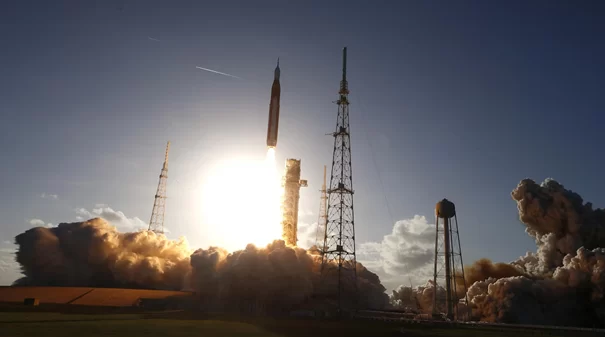
Photo by Vecteezy
There is a gap between doing good foresight work and getting anyone to care about it. Navigating that gap is one of the less talked about parts of the work.
I work in strategy in the energy sector. The people I work with are smart and analytical. We plan long-horizon investments. We build major infrastructure. These are exactly the kinds of people who should want to think about the future. And yet, the moment a conversation starts to sound like foresight, engagement feels difficult.
When I started the Houston Foresight program, I thought my biggest challenge would be mastering the methods. The scanning. The scenarios. The frameworks. What I’ve found is that the analysis is the easy part, at least for me. The hard part, when I try to apply this to my work, is getting people to listen, and frankly, to care.
The “So What” Problem
You can build a beautiful set of scenarios, map out a dozen emerging trends, and put together a fancy presentation, and still get a room full of polite, disengaged faces staring back at you.
In one of my class readings, Scott Smith, a foresight practitioner, addresses this challenge directly in his piece Notes to Young Foresighters. He argues that a trend without a “so what” is incomplete. Without the implications, it is just an observation.
I have experienced this firsthand. I have walked into a room with what I thought was a genuinely important signal about where the energy sector was heading, and watched the conversation stall the moment it moved from “interesting” to “so what does this mean for us?”. If you do not have that answer ready, the insight does not survive the meeting.
Naming and Framing
Smith also talks about the importance of labeling. He calls it micromarketing: your insights are products, and you have to give them good names. The name is often the only thing that stays with the audience long after the presentation is over.
This is not just a foresight problem. Research in organizational communication consistently shows that how an idea is framed shapes whether it gets adopted, ignored, or actively resisted. People do not evaluate ideas in isolation; they evaluate them against the mental models they already hold. In the energy sector, I have seen how the same signal can land completely differently depending on how it is framed. A shift that reads as a distant technology story gets set aside. The same shift, framed as a question about the value of current assets in fifteen years, gets people’s attention.
Communicating Uncertainty
One of the most uncomfortable parts of foresight communication is that you are not there to give people a single answer. Most people in strategic roles are comfortable with ambiguity; what they are less comfortable with is ambiguity that does not come with a direction. They want something they can act on.
This is where a lot of foresight work falls short. The analysis is rigorous, the signals are real, but the communication stops at “here is what is changing” without getting to “here is what that means for the decisions you are making now.” The step from observation to implication is critical: that is where the work lands or does not.
The reframe that tends to work is moving from a single view of the future to a range of possibilities. Instead of presenting one trajectory, you help people think through what could happen and what they should be ready for. That shift, from a fixed outlook to a possibility space, is often what makes foresight click for a skeptical audience.
The Real Job
The Houston Foresight program teaches you to think rigorously about the future: how to work with uncertainty in a structured way, how to make sense of complexity, how to develop a point of view. That foundation is essential. But it is only half the job.
The other half happens in the room. It happens when you have to take careful, nuanced analysis and make it matter to people who are busy, skeptical, or simply not yet convinced that the future is relevant to what they are working on today. That is a different skill, and it is one the program pushes you toward but that you ultimately have to develop through practice.
Smith ends his piece with a simple piece of advice: be bold, and stay with it. If you believe something is worth saying, say it clearly and stand behind it. Getting people to think differently about the future is the whole point. Everything else is preparation.
Looking Ahead
The challenge of making foresight land is not getting easier. As AI tools make it easier to generate analysis, scan signals, and produce scenario outputs at scale, the bottleneck shifts further toward the human side of the work: judgment, framing, and the ability to make complex futures feel relevant to the people in the room. The foresight practitioners who will matter most in the coming years are not necessarily the ones with the most sophisticated methods. They are the ones who can take a well-grounded view of what might be coming and make it land with the people who need to hear it.
References
Smith, S. (2011, October 6). Notes to Young Foresighters. Changeist.
About Ariwoola Ogbemi
Ariwoola Ogbemi is an energy industry executive, with over 20 years of broad international experience across three continents. Her areas of expertise span strategy, business development, leading complex organizations and driving change. She holds a bachelor’s degree in computer science and an MBA, and will graduate from the University of Houston’s Master of Science in Foresight program in Spring 2026. She is a member of the Association of Professional Futurists.