
Futurist Dave Bengston
The Pyrocene is the age of fire in which we live. Coined by fire historian Stephen Pyne in 2015, the term has been adopted by environmental scholars and journalists who focus on the impacts of climate change, the increasing frequency and intensity of wildfires, and the rise of megafires around the world. Like the Anthropocene, the Pyrocene suggests that humans are shaping the future of the Earth in profound ways. Our use of fire – including burning fossil fuels – has been a driving force of this change.
Darnell, Cavasso and Lighthall have been exploring opportunities for a participatory roundtable on the future of wildfire over the past year, and partnered with the RAND Corporation to deliver a one-day workshop titled “Futuring the Pyrocene: What Will Be Needed to Live with Fire in 2075?” in Santa Monica, California. RAND is a seminal organization in the history and development of futures research in the United States. The Delphi method was developed by pioneering futurists Olaf Helmer and Ted Gordon at RAND. Herman Kahn – one of the fathers of scenario planning – worked at RAND in the late 1940s and 1950s. Today, RAND has considerable expertise in futures research and RAND Europe includes the Centre for Futures and Foresight Studies.
“Futuring the Pyrocene” was the kick-off in a broader project to proactively address the growing challenges of the age of fire. The intention was to reduce the risks from high-intensity wildfires necessitates the creation of new ideas, narratives, and reimaginations that disrupt the status quo and bring about transformative change across systems and sectors over the long term.
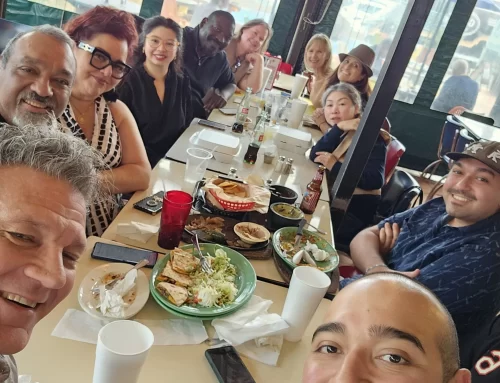
The workshop started with an introductory plenary session to set the stage for the day’s discussion. This was followed by sector-specific breakout sessions in which participants from each of the invited sectors (the built environment, utilities, and health care) explored how each sector could “live with fire” in the Pyrocene and what fire will encounter when it arrives at the sector’s expected environment. These facilitated brainstorming groups included wildfire experts.
After lunch, breakout sessions titled “Amplifying Responses through Cross-Sector Engagement” were held. These groups included members of all three sectors and wildfire experts. The idea was to identify potential conflicts between the sector-specific ideas generated earlier, as well as opportunities and synergy among the sectors in addressing how they will be impacted by wildland fire in the longer term future.
A closing plenary recapped ideas from the two rounds of breakout sessions and posed the questions: What did you learn today about living with fire in the future? Of what you learned today, what is your biggest fear for our future of living with fire? Of what you learned today, what is your biggest hope for living with fire?
A summary of the workshop is being prepared by RAND. Next steps in the broader project include moving forward with efforts to launch a network with specific opportunities in 2026 to further explore and utilize this approach to futuring around how communities, industry and other sectors can be as prepared as possible to receive, respond to and recover from wildland fire.
About the authors
Dave Bengston is an alum of Houston Foresight Certificate Boot Camp and sponsored a multi-year research program with Houston Foresight. For this piece, he was assisted by Elizabeth Cavasso, Jane Darnell, Katie Lighthall of National Cohesive Wildland Fire Management Strategy.